Everyday Invoicing

The short version
- Every sales tax registered person must now report each invoice to FBR in real time and print the FBR invoice number and QR code on the customer's copy (Chapter XIV, Sales Tax Rules, via SRO 69(I)/2025).
- All phase-in deadlines under SRO 1852(I)/2025 have passed — the last was 31 December 2025. FBR is now suspending registrations of those who have not integrated.
- You integrate through a licensed integrator or PRAL, pass the sandbox scenarios for your business activity, then switch to a production token.
- Two clocks matter: 24 hours to transmit invoices raised offline, and 72 hours to cancel or edit a genuine mistake.
What digital invoicing actually requires
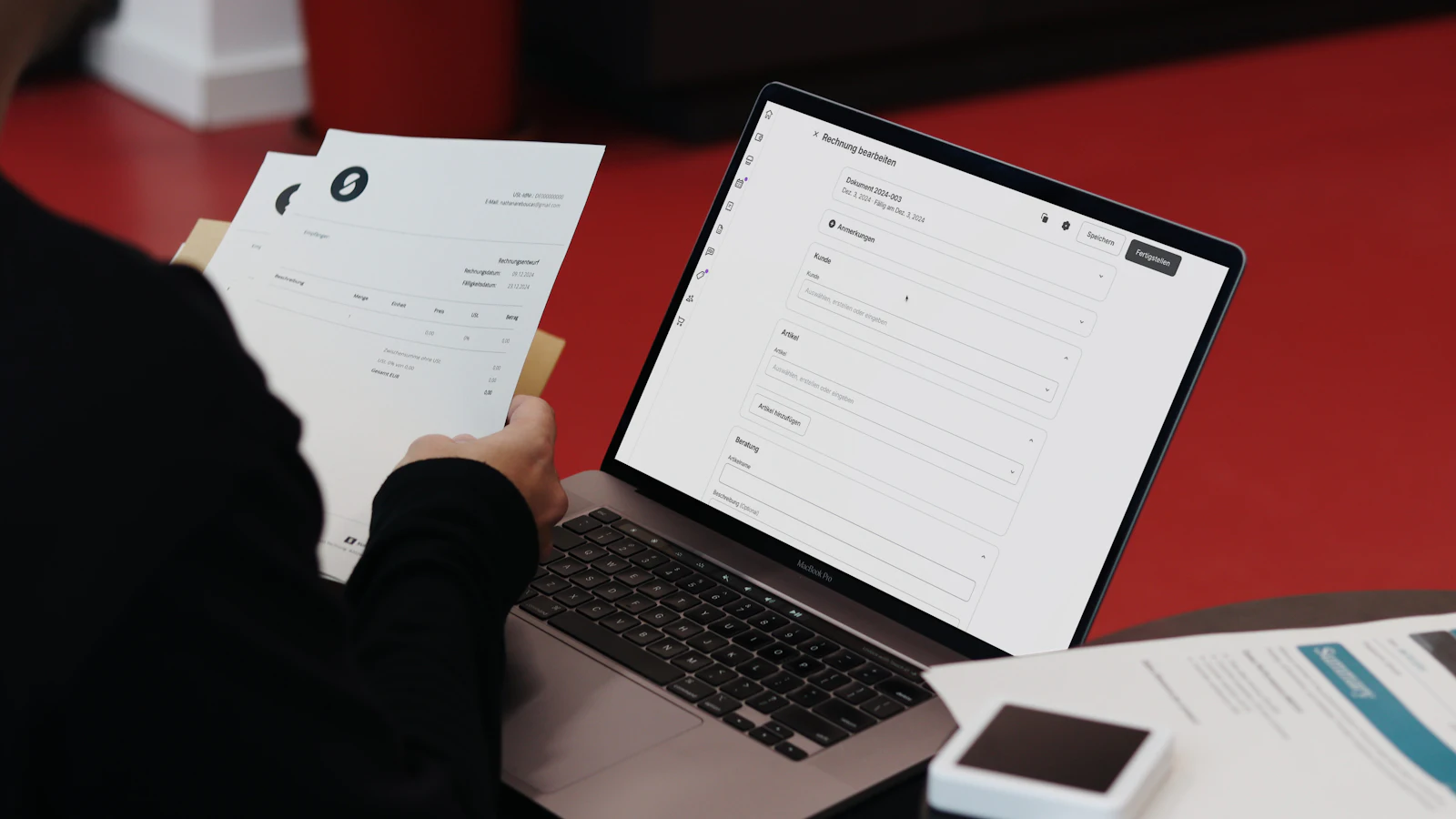
Chapter XIV of the Sales Tax Rules, 2006 — substituted by SRO 69(I)/2025 of 29 January 2025 — changes when FBR learns about your sales. Instead of finding out at month-end from your return, FBR receives each sales tax invoice as you issue it, through an API run by PRAL. FBR checks the invoice, and if it is accepted, returns a unique FBR invoice number. That number, with a QR code, must be printed on the invoice you give your customer.
An invoice that was never reported is not a valid tax invoice. That single sentence is why buyers, auditors and now FBR's enforcement teams care so much about integration.
Who is covered, and by when
The operative timetable is SRO 1852(I)/2025 (24 September 2025). The dates were "not later than" dates, and all of them have now passed:
| Category | Live e-invoicing from |
|---|---|
| Public companies (any turnover) | 1 November 2025 |
| Other companies, turnover above Rs 1 billion | 1 November 2025 |
| Importers (any turnover) | 1 November 2025 |
| Individuals and AOPs, turnover above Rs 100 million | 1 November 2025 |
| Other companies, turnover Rs 100m – Rs 1bn | 15 November 2025 |
| Other companies, turnover up to Rs 100m | 1 December 2025 |
| All other registered persons | 31 December 2025 |
Since then FBR has added more: Islamabad service providers in specified ICT tables from June 2026 (STGO 05 of 2026), and federal excise duty, Islamabad services tax and electronic debit/credit notes under SROs 1666 and 1667 of 2026.
You are past your deadline. FBR began suspending sales tax registrations for non-integration in September 2026 — read what suspension means and how to get restored.
What every invoice must carry
Rule 150R(13) lists the particulars. FBR's system validates them and rejects the whole invoice if one is missing or inconsistent. The ones that trip businesses up most often:
- Buyer details — NTN/CNIC and registration status, province.
- HS code and unit of measure for each item.
- Sale type and rate, and where a reduced rate or exemption applies, the SRO and schedule serial that authorises it.
- Values that add up to the paisa — FBR recomputes tax on the value after discount, and further tax, extra tax and withholding must be exact.
The two clocks you must respect
24 hours for offline invoices
Under rule 150XC, an invoice raised during an internet or power failure must reach FBR within 24 hours. FBR's own documentation says its system does not retry failed uploads — if your software drops an invoice when the connection breaks, it is simply never reported. Your software must queue and retry.
72 hours for corrections
Sales Tax General Order 01 of 2026 allows a valid invoice issued by bona fide mistake to be cancelled, deleted or edited within 72 hours of issue. After that you need the Commissioner's prior approval, or a credit/debit note. Details in our guide to the 72-hour rule.
Going live in four steps
- Register in IRIS for Digital Invoicing, declare your business activity and sector accurately (they decide which test scenarios you must pass), and receive a sandbox token. Note that transmissions are only accepted from whitelisted IP addresses you declare.
- Choose how you integrate. PRAL offers its own route; licensed integrators offer software built on top of it. STGO 01 of 2026 lets you use more than one. Our integrator checklist covers what to ask.
- Pass the sandbox scenarios FBR requires for your activity — each one must be accepted before FBR issues a production token.
- Switch to production, train the staff who raise invoices, and reconcile your first month's return against your reported invoices.
Penalties
Failure to integrate is penalised under section 33 of the Sales Tax Act, and FBR sought stiffer digital-invoicing penalties through the Finance Bill 2026. Figures widely reported by practitioners start at Rs 500,000 for a first default and rise to Rs 3 million for repeated defaults — check the current text of section 33 with your adviser. In practice, the larger cost is suspension of registration under section 21 and its effect on your buyers' input tax.
Records: six years
Rule 150S(1) requires the invoices and FBR's responses to be kept, and producible, for six years. Keep them somewhere that is backed up and cannot be quietly overwritten.
Khulasa — Roman Urdu
Digital invoicing ka matlab hai ke har sales tax invoice issue karte hi FBR ko bhejni hai, aur FBR jo invoice number aur QR code wapis deta hai woh customer ki copy par print karna hai. SRO 1852(I)/2025 ki tamam deadlines guzar chuki hain — aakhri 31 December 2025 thi.
Live hone ke char qadam: IRIS mein registration, licensed integrator ya PRAL ka intikhab, sandbox scenarios pass karna, aur production token ke sath live hona. Offline invoice 24 ghante mein aur ghalti ki durusti 72 ghante mein karni hoti hai.
Frequently asked questions
Is FBR digital invoicing mandatory for small businesses?
For sales tax registered persons, yes — SRO 1852(I)/2025 brought in "all other registered persons" by 31 December 2025. Small retailers who opted into the Fixed Tax Asaan Scheme for Tax Year 2026 are reported to be exempt from POS and digital invoicing requirements; check your own status.
What is the difference between PRAL and a licensed integrator?
PRAL runs FBR's digital invoicing API and offers its own route to it. Licensed integrators provide software that connects to the same API, usually adding features such as product and buyer records, automatic retries, printing and reports. STGO 01 of 2026 lets you use more than one.
What happens if FBR rejects an invoice?
A rejected invoice has not been reported. FBR returns an error code; fix the field it names and resend. Good software checks the invoice against FBR's error rules before sending, so most mistakes are caught on your screen.
Do I need a QR code on every invoice?
Yes — the customer's copy of every reported invoice must carry the FBR invoice number and the QR code.
Sources and further reading
- Faubix — FBR digital invoicing deadlines and notifications (SRO 69, 709, 1413, 1852 of 2025; STGO 01 & 05 of 2026)
- ProPakistani — FBR gives businesses 72 hours to correct invoices (STGO 01 of 2026)
- Business Recorder — FBR allows registered persons to engage licensed integrators
- Express Tribune — Trader e-invoice deadline extended
- TaxationPk — FBR to seek penalties for digital invoicing violations in Finance Bill 2026
This article explains rules as we understand them on the date shown. It is not tax advice. Notifications change — check the current SRO or general order, and your own position with your tax adviser.